NATURAL BIRD PERCH GUIDE
Which British Woods Are Safe for Bird Perches?
Why Use Natural Branches for Bird Perches?
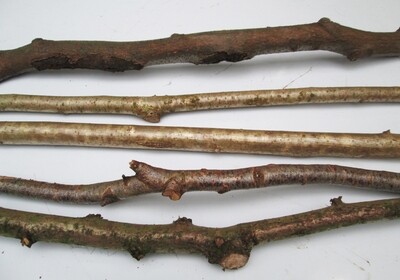
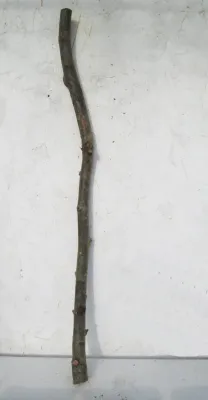
Natural branches provide something a perfectly uniform wooden dowel cannot: variation. A real branch naturally changes in diameter along its length and has different textures, bends and knots.
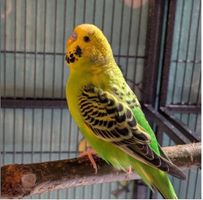
This gives a bird different surfaces and positions to grip as it moves around. Providing appropriately sized perches with varied diameters and textures can also help prevent the bird's feet from continually bearing pressure in exactly the same places.
This is why we leave our woodland perches naturally irregular rather than trying to make every branch perfectly straight and uniform.
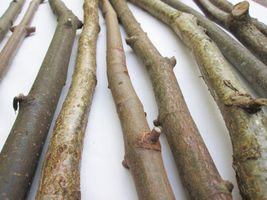
Hazel, Beech & Sycamore for Bird Perches
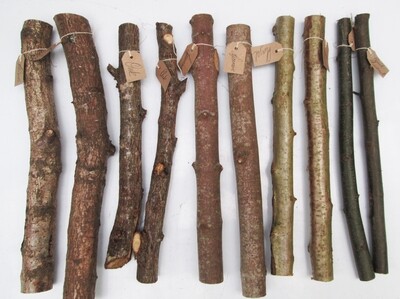
At Hanging Wood, the main British woods we use for our natural bird perches are Hazel, Beech and Sycamore, all cut from healthy living trees in our own Surrey woodland.
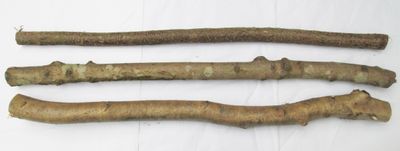
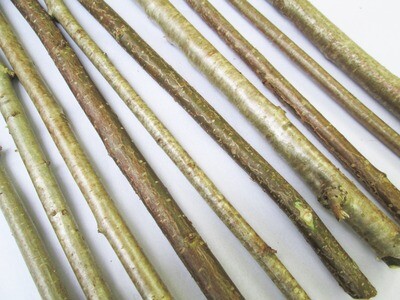
Hazel is one of our favourites. It often produces relatively straight branches and is particularly useful for longer cage and aviary perches.
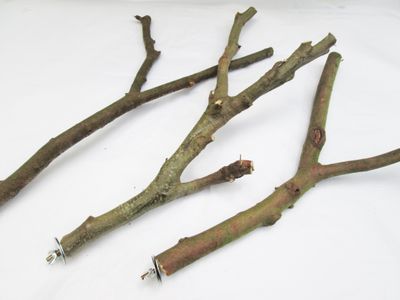
Beech tends to give us more bends, knots and irregular shapes, making it useful when we want plenty of natural variation.
Sycamore produces strong branches in a wide range of shapes and sizes and is also useful for our natural perch stands.
We select each branch individually rather than trying to make them identical. As with any natural material intended for an animal, check that the wood and setup are suitable for your particular bird species before use.
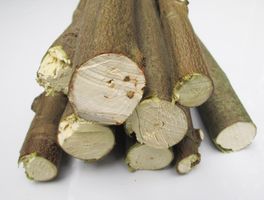
Choosing the Right Bird Perch Diameter
There isn't one ideal perch diameter for every bird. A small finch or canary has very different feet from a large parrot, so the branch needs to be appropriate for the individual bird.
For very small birds, we offer branches around 1–2cm diameter. If your bird needs something particularly slim, you can request branches with a maximum diameter of approximately 1cm, subject to availability.
For medium-sized birds, we offer branches around 2–3cm diameter, while our extra-thick perches measure approximately 4–5cm for substantially larger birds.
These measurements are a guide rather than a universal rule. Birds vary greatly between species and individuals. The bird should be able to grip the perch comfortably, and providing a selection of suitable diameters gives the feet a variety of positions rather than one identical surface throughout the enclosure.
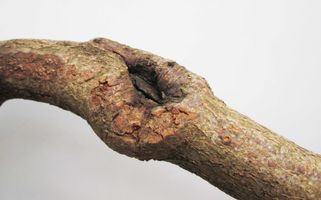
Why We Leave the Bark, Knots & Natural Bends
Our bird perches are deliberately left looking like natural branches. We keep the bark, knots, bends and changes in diameter rather than sanding the wood into a smooth, uniform shape.
These natural variations create different textures and gripping positions as the bird moves along the branch. Our mixed perch packs therefore contain both straighter and more crooked branches rather than a set of identical sticks.
Some birds, particularly parrots, may also enjoy chewing and stripping the bark. This is normal behaviour, but natural wooden perches should be checked regularly for excessive damage, contamination or sharp splinters and replaced when necessary.
Because our branches are natural products, no two perches will ever be exactly the same — the knots, bark colour, bends and shape are part of the branch rather than imperfections.
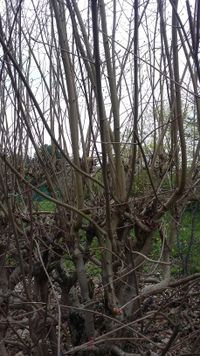
How Our Natural Bird Perches Are Supplied
Our bird perch branches are freshly cut from healthy living trees in our Surrey woodland. We do not collect fallen or partially decayed branches from the woodland floor for our bird perches.
We supply the branches in their natural, unwashed and unsterilised state. We do this because many customers specifically want natural woodland branches with the original bark and character intact.
If you prefer to clean or disinfect a branch before introducing it to your bird, use a method appropriate for birds and follow the instructions for any avian-safe cage disinfectant you choose to use. If you are unsure about the requirements of your particular species, seek advice from an avian vet.
Our woodland is managed without the use of pesticides or insecticides.
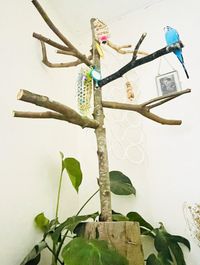
Natural Bird Perch Trees & Freestanding Stands
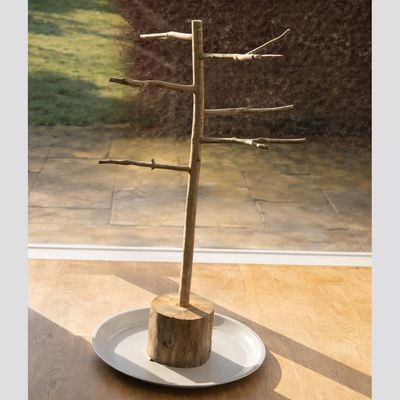
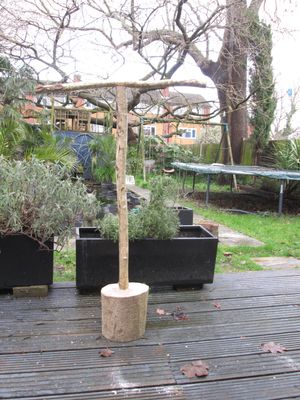
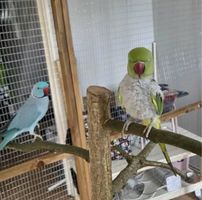
Natural branches don't have to be confined to the cage. We also use our woodland branches to make freestanding perch stands and natural bird trees for out-of-cage perching and activity.
Our smaller bird tree uses a natural upright with a selection of screw-in branches, including forked and irregular shapes, to create a simple tree-like structure for budgies, canaries and other suitable small birds.
For larger birds such as parrots, we also make a more substantial T-shaped freestanding perch, using thicker natural branches to provide an appropriately sized perch and stable base.
Like our cage perches, these stands retain the natural bark, knots and individual shape of the wood, so every one is different.